

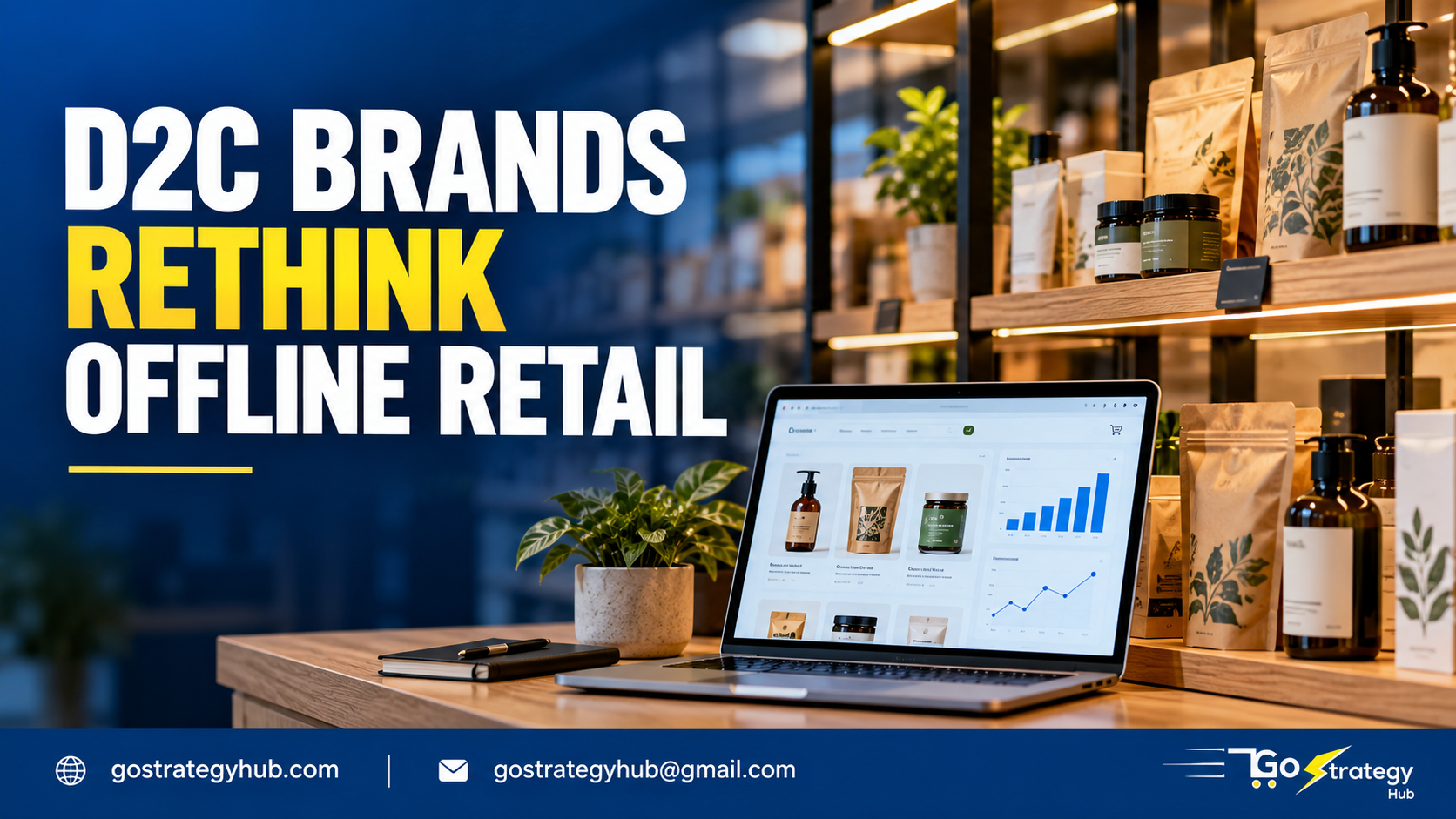
For years, many Direct-to-Consumer (D2C) brands focused on selling products through their own websites, marketplaces, and social media ads. The idea was simple: reach customers online, avoid the cost of physical stores, and grow sales directly.
But the market is changing.
Customer acquisition costs can rise, competition becomes stronger, and customers do not always purchase a product after seeing an online ad. Many want to touch a product, check its quality, compare options, or speak to someone before making a decision.
That is why D2C brands are rethinking offline retail in 2026.
Instead of choosing between online and offline sales, brands are exploring how both channels can work together.
Why Are D2C Brands Looking at Offline Retail?
1. Online Advertising Is Becoming More Competitive
Online advertising gives D2C brands access to a large audience, but reaching the right customers is not always easy.
Brands may experience rising cost per click, higher customer acquisition costs, and inconsistent conversion rates. A campaign can generate website traffic without producing enough purchases.
Offline retail offers another way to reach customers. A product displayed in a store can attract people who are already shopping and give them an opportunity to experience the product directly.
However, offline retail is not automatically cheaper. Rent, staff, inventory, distributor margins, and retailer commissions can add significant costs.
The goal is to find the right balance between online customer acquisition and offline sales.
2. Customers Want to Experience Products Before Buying
Some products are easier to sell when customers can see, touch, smell, or try them.
This is particularly relevant for categories such as skincare, cosmetics, food, fashion, home products, and personal care.
For example, a customer might discover a skincare brand through Instagram ads but prefer to test the product at a retail counter before purchasing.
Similarly, a customer may discover a packaged food brand online but feel more confident buying it after seeing it in a familiar local store.
Physical availability can help build trust, especially for new brands that customers have not purchased before.
3. Offline Retail Can Improve Brand Visibility
Online brands compete for attention across search results, social feeds, and marketplaces.
A physical store, retail shelf, or temporary pop-up can create another opportunity for customers to discover a brand.
Offline visibility can also support online sales. Customers may see a product in a store, search for the brand later, visit its website, and complete the purchase online.
This means the value of offline retail should not always be measured only by sales made inside the store.
Brands should also consider whether physical presence improves branded searches, website visits, repeat purchases, and overall customer awareness.
Which Offline Retail Models Can D2C Brands Explore?
D2C brands do not need to open expensive flagship stores immediately. They can test different retail models before making a major investment.
1. Retail Partnerships
Brands can partner with existing retailers to place their products in relevant stores.
This approach can help brands test demand in selected locations without managing an entire retail operation themselves.
It is important to track product sales, retailer margins, stock availability, and repeat orders before expanding to more stores.
2. Pop-Up Stores and Exhibitions
Temporary stores, exhibitions, and product sampling events allow brands to meet customers directly.
They can be useful for testing new products, collecting feedback, and understanding which locations attract the most interest.
A successful pop-up can provide valuable information before a brand commits to a long-term lease.
3. Experience Centres
Some brands may benefit from a physical space where customers can try products, receive guidance, or experience the brand.
This can work particularly well for products that require demonstrations, comparisons, or personal recommendations.
The store should have a clear purpose beyond simply displaying inventory.
4. Quick Commerce and Modern Retail
Depending on the product category, D2C brands can explore quick-commerce platforms, supermarkets, speciality stores, and modern retail chains.
These channels offer different customer experiences and cost structures. Brands should evaluate commissions, discount requirements, fulfilment costs, and the potential for repeat purchases before choosing a channel.
How Performance Marketing Fits Into Offline Retail
Offline expansion does not mean that brands should reduce their focus on digital marketing. In fact, digital marketing can help them understand where and how to expand.
Here are four practical ways to connect online marketing with offline retail.
1. Use Digital Campaigns to Test Local Demand
Before opening a store, run location-focused campaigns in the areas being considered.
Measure qualified enquiries, product interest, website purchases, and store-related actions where tracking is available.
These signals can help identify promising locations, although advertising engagement alone does not prove that a store will be profitable.
2. Promote Store Visits and Local Availability
If products are available at selected retail locations, brands can communicate that availability through local campaigns, store locator pages, and relevant landing pages.
Make it easy for customers to find the nearest store, check product availability, and understand what they can purchase there.
3. Connect Offline Sales With Marketing Data
A major challenge is understanding whether advertising contributes to sales that happen offline.
Brands can use trackable campaign links, QR codes, coupon codes, CRM records, and eligible offline conversion imports to connect customer interactions with purchases.
For example, if a customer clicks an ad, visits a store, and purchases a product, the brand can attempt to connect those events using appropriate consent, identifiers, and measurement systems.
Better measurement helps marketers make decisions based on business outcomes rather than clicks alone.
4. Build Repeat Purchases Across Channels
A customer may discover a brand in a physical store but place future orders through its website.
Brands can support this journey through loyalty programmes, product education, email marketing, and consent-based WhatsApp communication.
The aim is to make the next purchase convenient, regardless of where the customer first discovered the product.
What Should D2C Founders Measure Before Expanding Offline?
Opening a store or entering retail without understanding the numbers can create unnecessary financial pressure.
Before expanding, founders should evaluate:
- Contribution margin: How much remains after product and variable selling costs?
- Customer acquisition cost: How much does it cost to acquire a customer through each channel?
- Retail margins: What portion of the selling price goes to retailers, distributors, or other partners?
- Inventory turnover: How quickly does the stock sell?
- Repeat purchase rate: Do customers return to buy again?
- Location-level sales: Which stores and areas generate sustainable demand?
- Incremental revenue: Does the new channel generate additional sales or simply shift existing online purchases?
These metrics help brands determine whether offline expansion is creating profitable growth.
Conclusion
D2C brands are rethinking offline retail because customer behaviour, competition, and growth economics are changing.
Online channels remain valuable for customer acquisition, product discovery, and measurable campaigns. Offline retail can add product experience, physical visibility, and access to customers who prefer buying in person.
The strongest approach is not to move offline simply because competitors are doing it. It is to test demand, understand the costs, measure the results, and expand when the numbers support the decision.
For founders, the opportunity lies in building a connected growth system where online advertising, physical retail, customer data, and repeat purchases support one another.
At GoStrategyHub, we believe performance marketing should focus on more than clicks and leads. It should help businesses understand how marketing contributes to sales and sustainable growth. If your D2C brand is planning its next stage of growth, the right strategy starts with understanding your customer journey and measuring what drives revenue.
