

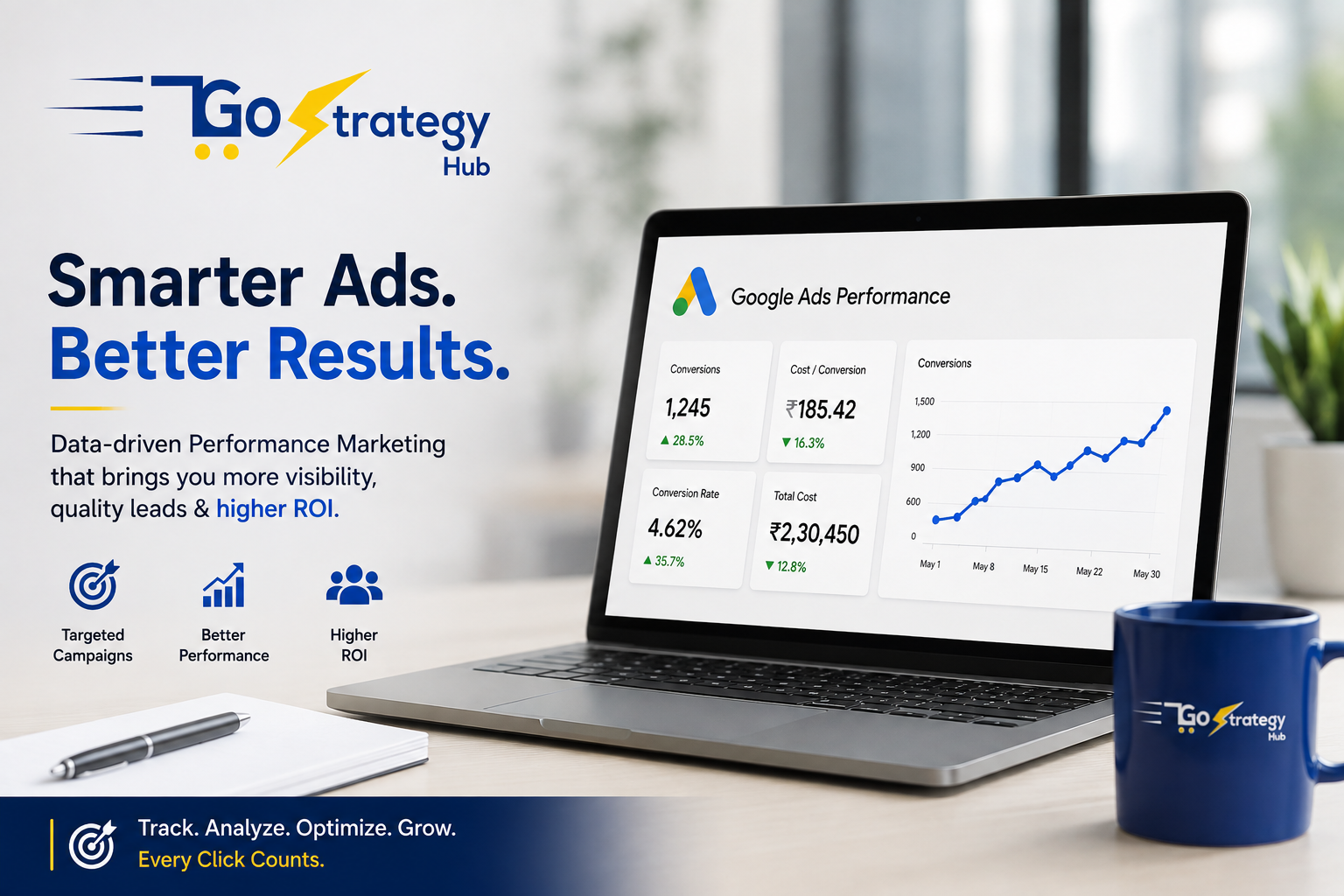
Running Google Ads without proper conversion tracking is like driving without knowing your destination. You may see clicks, impressions, and traffic, but you cannot clearly understand which campaigns are actually generating results.
For businesses in India, conversion tracking Google Ads India is an essential part of performance marketing. It helps businesses measure leads, purchases, calls, form submissions, and other valuable actions generated through Google Ads.
What Is Google Ads Conversion Tracking?
Google Ads conversion tracking is a measurement system that records when someone completes an important action after interacting with your advertisement.
Depending on your business, a conversion could be:
• Purchase
• Lead form submission
• Phone call
• WhatsApp enquiry
• Appointment booking
• Sign up
• Brochure or catalogue download
Instead of measuring success only through clicks, conversion tracking helps you understand whether those clicks are actually contributing to business growth.
Why Conversion Tracking Matters for Indian Businesses
Google Ads can generate significant traffic, but traffic alone does not guarantee revenue.
For example, imagine an Indian B2B company spends ₹50,000 on Google Ads and receives 1,000 clicks. Without conversion tracking, the business may not know which keywords or campaigns generated qualified enquiries.
With proper tracking, you can identify:
• Which campaigns generate conversions
• Which keywords bring valuable customers
• Which ads generate better results
• Cost per conversion
• Conversion rate
• Revenue generated from advertising
This information allows businesses to make better decisions about their advertising budget.
How to Set Up Conversion Tracking in Google Ads
Setting up conversion tracking Google Ads India usually involves a few important steps.
1. Define Your Conversion
First, decide what action represents a successful outcome for your business.
For an ecommerce brand, this could be a purchase.
For a service business, it could be a lead form submission or phone call.
2. Create the Conversion Action
Inside Google Ads, create the relevant conversion action and select the appropriate category, value, and counting method.
For ecommerce businesses, assigning conversion values can also help Google understand which conversions generate more revenue.
3. Install the Tracking Tag
The Google Ads conversion tracking tag can be implemented directly or through Google Tag Manager.
Google Tag Manager can make tracking easier because marketers can manage different tracking events without repeatedly changing website code.
4. Test Your Tracking
Never assume that tracking is working simply because the tag has been installed.
Test the complete customer journey and confirm that the conversion is being recorded correctly in Google Ads.
Incorrect tracking can result in incorrect campaign optimization and misleading performance reports.
Common Conversion Tracking Mistakes
Many businesses and even inexperienced marketers make tracking mistakes that can affect campaign performance.
Tracking Only Page Views
A website visit is not necessarily a business result. Your primary conversions should represent meaningful customer actions.
Counting Every Lead Equally
Not every lead has the same value.
A ₹10,000 customer and a ₹1 lakh customer should not necessarily be treated as identical conversions.
Duplicate Conversions
Poorly configured tags can sometimes count the same action multiple times, making campaign performance appear better than it actually is.
Ignoring Offline Conversions
For businesses where leads convert through calls, sales teams, or physical meetings, tracking should ideally connect online advertising with offline outcomes.
Conversion Tracking and Performance Marketing
Conversion tracking is one of the foundations of performance marketing.
A Performance Marketing Agency does not focus only on impressions and clicks. The objective is to understand how advertising contributes to measurable business outcomes.
When reliable conversion data is available, marketers can make better decisions about:
• Budget allocation
• Keyword selection
• Campaign optimization
• Audience targeting
• Ad messaging
• Landing pages
• Customer acquisition cost
Better data leads to better optimization.
Should You Work With an Advertising Agency?
Setting up basic conversion tracking may look simple, but businesses often have multiple platforms, landing pages, forms, CRM systems, phone calls, and ecommerce events.
An experienced Advertising Agency can help audit the tracking setup, identify missing conversions, remove duplicate events, and connect advertising data with business outcomes.
The important point is not simply to install tracking.
The goal is to build a measurement system that helps answer one question:
Is your Google Ads investment actually generating business results?
Final Thoughts
For businesses investing in Google Ads, conversion tracking Google Ads India should be treated as a core part of campaign setup, not an optional technical feature.
Clicks tell you that people interacted with your advertisement.
Conversions tell you whether those interactions created meaningful business outcomes.
If your tracking is inaccurate, even a well-managed Google Ads campaign can make poor optimization decisions. But when your conversion data is reliable, you can understand what is working, identify what is wasting budget, and make smarter decisions about future advertising investment.
Whether you manage campaigns internally or work with a Performance Marketing Agency, accurate conversion tracking should be the foundation of your Google Ads strategy.
