

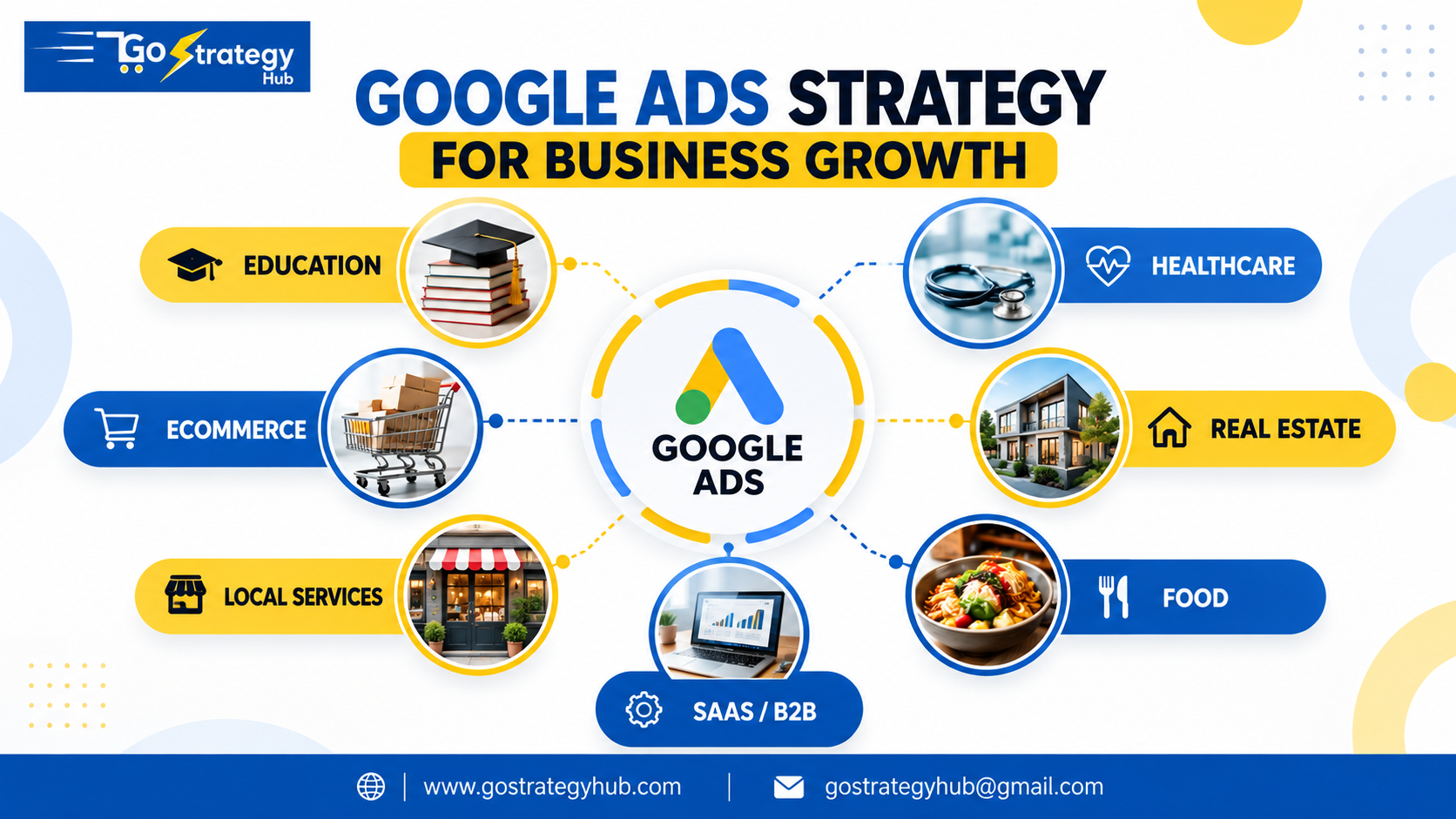
New business owners often ask how to use Google Ads to grow faster without wasting budget. The answer is not a one size fits all campaign. Every niche has different search behaviour, competition levels, and conversion paths. A strategy that works for ecommerce can fail completely for a clinic or a real estate project.
As a team that runs performance campaigns daily from Mumbai, we have tested Google Ads across multiple industries. Below is a clear, practical Google Ads strategy for business growth tailored to the most common niches.
Why Google Ads Still Drives Reliable Growth in 2026
Google Ads captures people who are already searching for a solution. That high intent traffic converts better than most other channels when the setup is correct. The key is matching the right campaign type, keywords, and landing experience to each business type.
Google Ads Strategy by Niche
1. Ecommerce and D2C Brands
The biggest problem new ecommerce brands face is spending on broad traffic that never buys. Competitors already dominate category and brand terms.
Start with Google Shopping and Performance Max using a clean product feed. Add exact and phrase match Search campaigns for high intent keywords. Use negative keywords aggressively from day one. Retarget website visitors with strong offers. Once you have conversion data, expand carefully. Many D2C brands working with a performance marketing agency in Mumbai see the fastest early growth from Shopping plus branded Search.
2. Local Services (salons, clinics, home services, tutors, gyms)
Local service businesses compete with both big players and hyper local listings. People search with strong “near me” intent and expect quick results.
Run location targeted Search campaigns. Use call extensions, location extensions, and keep the Google Business Profile fully optimised. Focus on service plus area keywords. Track calls and form fills as primary conversions. Consistent lead flow comes from owning the most relevant local search terms and responding fast.
3. Education and Edtech
Parents and students research for weeks before deciding. Search volume is seasonal and competition rises during admission periods.
Build Search campaigns around course names, exam names, and city specific keywords. Use Remarketing to stay visible during the consideration phase. Add YouTube for educational content that builds trust. Measure cost per qualified lead, not just form submissions. Performance Max can scale once enough conversion data is available.
4. Healthcare and Clinics
Trust is the main barrier. People search symptoms and treatments but convert slowly. Ad policies are strict.
Target precise treatment plus location keywords. Create landing pages that clearly show doctor credentials, patient reviews, and treatment details. Enable call tracking. Avoid exaggerated health claims. Clinics that focus on specific high intent procedures and follow up leads quickly see steady appointment growth.
5. Real Estate
Competition on city and project keywords is intense. Sales cycles are long and cost per lead is high.
Run Search campaigns on project names, locality plus property type keywords, and branded terms. Combine with Remarketing and YouTube for projects still in consideration stage. The quality of the landing page and the speed of the sales team response decide whether a lead becomes a site visit. Focus on qualified site visits rather than raw lead volume.
6. SaaS and B2B Services
Search volume is lower than consumer niches but each customer is worth more. Decision makers research carefully.
Use exact match keywords around the problem your product solves and the solution category. Add carefully selected competitor terms. Remarketing helps stay in front of people who visited the site. Track demo requests and trial sign ups with proper attribution. Google remains effective for capturing high intent B2B searches.
7. Food, Restaurants and Cloud Kitchens
Competition from large aggregators is high and most searches are local and immediate.
Target location plus cuisine or “near me” keywords. Optimise the Google Business Profile fully. Use Performance Max and local campaigns to drive both online orders and walk ins. Strong offers and clear menus on the landing page improve conversion rates.
Core Google Ads Framework That Works Across Niches
- Begin with exact and phrase match on the highest intent keywords. Avoid broad match until you have data.
- Set up proper conversion tracking for leads, purchases, calls, and qualified actions.
- Fix the landing page before scaling spend. Speed, clarity, trust signals, and mobile experience decide results.
- Give new campaigns enough budget and time to gather data. Judge performance after two to four weeks.
- Use negative keywords continuously to protect budget.
- Review search terms weekly and expand only what converts.
- Layer Remarketing once you have website traffic.
Mistakes That Still Waste Budget in 2026
Launching campaigns without clear conversion tracking.
Ignoring negative keywords.
Optimising only for cheap clicks instead of quality leads or sales.
Changing campaigns too frequently before data is available.
Using the same strategy for every niche.
Final Thoughts
Google Ads remains one of the most effective channels for business growth when the strategy matches the niche. Ecommerce needs strong product feeds and Shopping. Local services need location precision and call tracking. Education and healthcare need trust building and qualification. Real estate needs qualified site visits. SaaS needs high intent problem solution keywords. Food businesses need local speed and offers.
A performance marketing agency in Mumbai that understands these differences can help new and growing businesses avoid costly trial and error. The businesses that grow consistently treat Google Ads as a performance system with clear goals, clean data, and continuous optimisation.
If you are planning to use Google Ads for growth, start by mapping the exact search terms your customers use and the actions that truly matter for your business. That clarity turns Google Ads from an expense into a reliable growth engine.
